Number Line Addition — Grade 1
Teach first graders to add with number lines. Printable worksheets, strategies, and classroom tips to build fluency within 10 and 20.
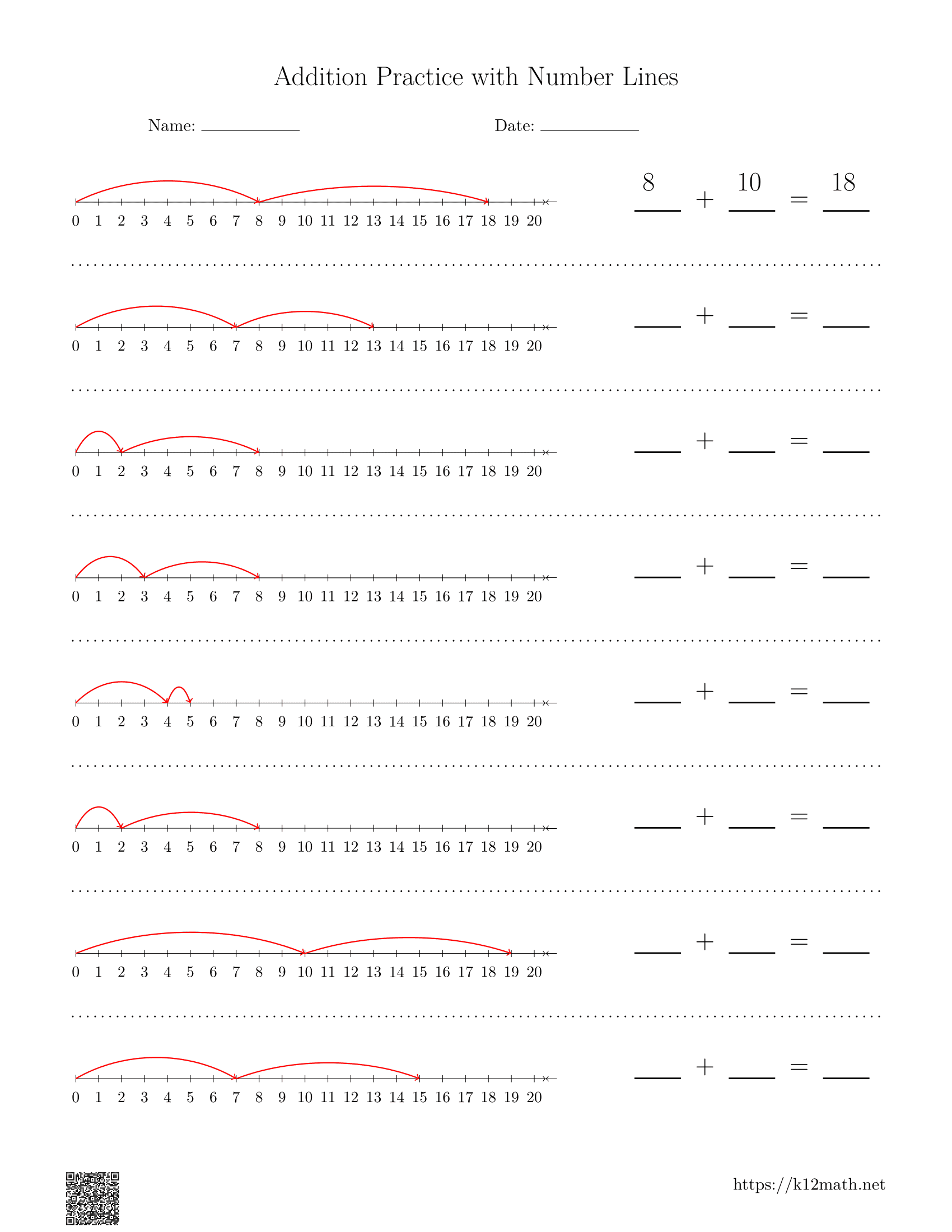
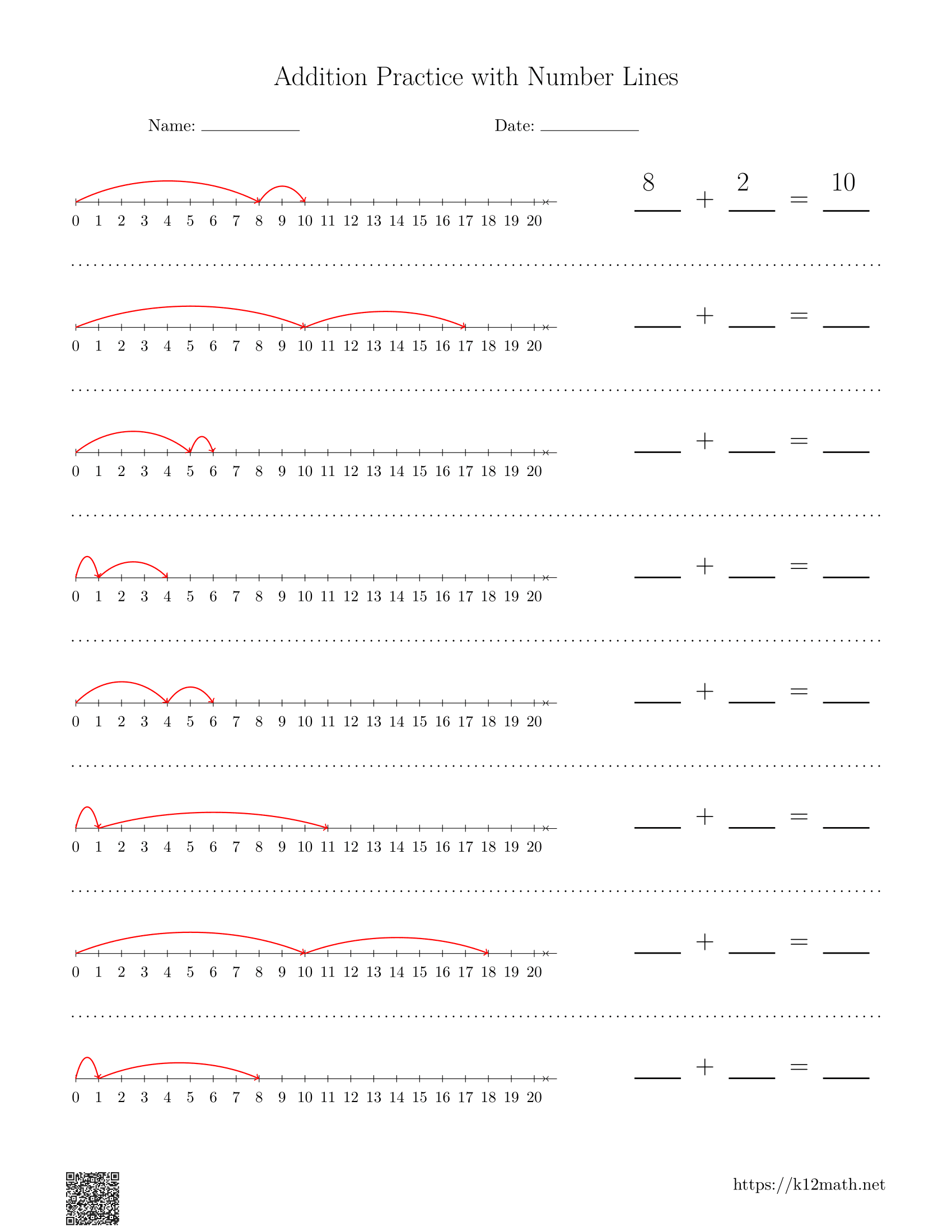
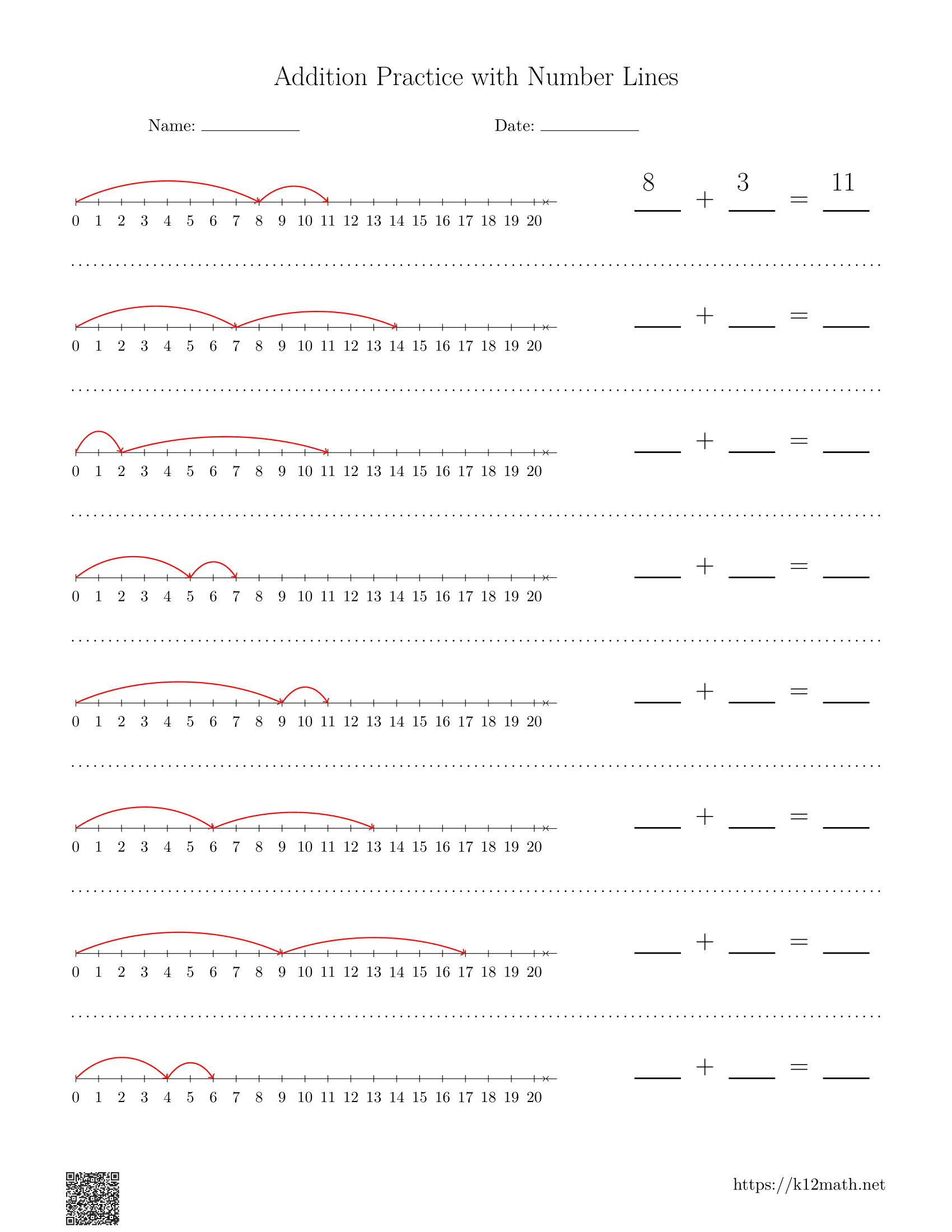
Number lines are powerful visual tools that help first graders understand addition as movement and distance. By jumping along a numbered line, students can physically see how numbers combine and build mental models for mathematical thinking.
When teaching with number lines, start with concrete manipulatives before introducing paper versions. Have students use their finger to track jumps, then progress to drawing hops and finally to mental counting. This gradual release of support builds confidence and mathematical fluency within the Common Core standards for Grade 1.
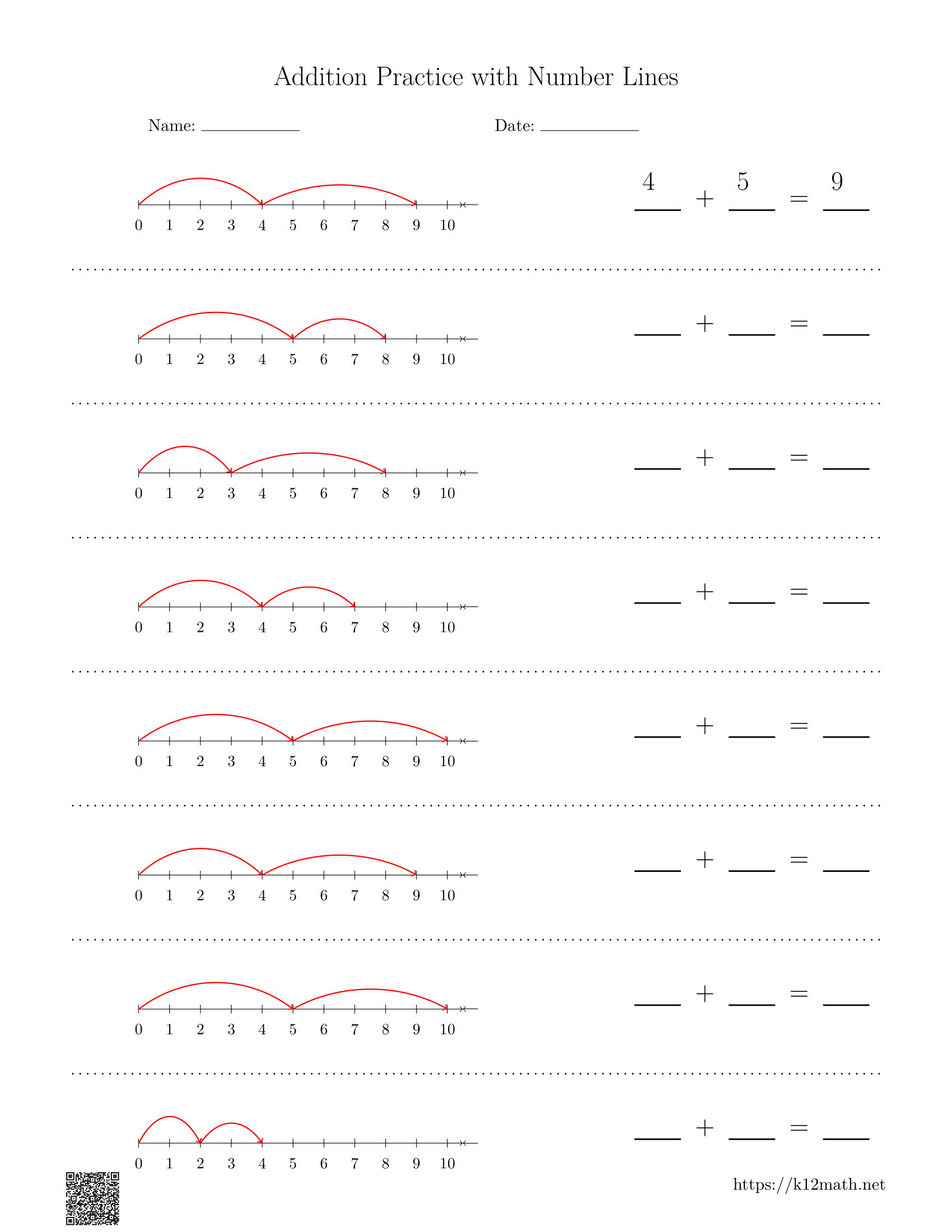
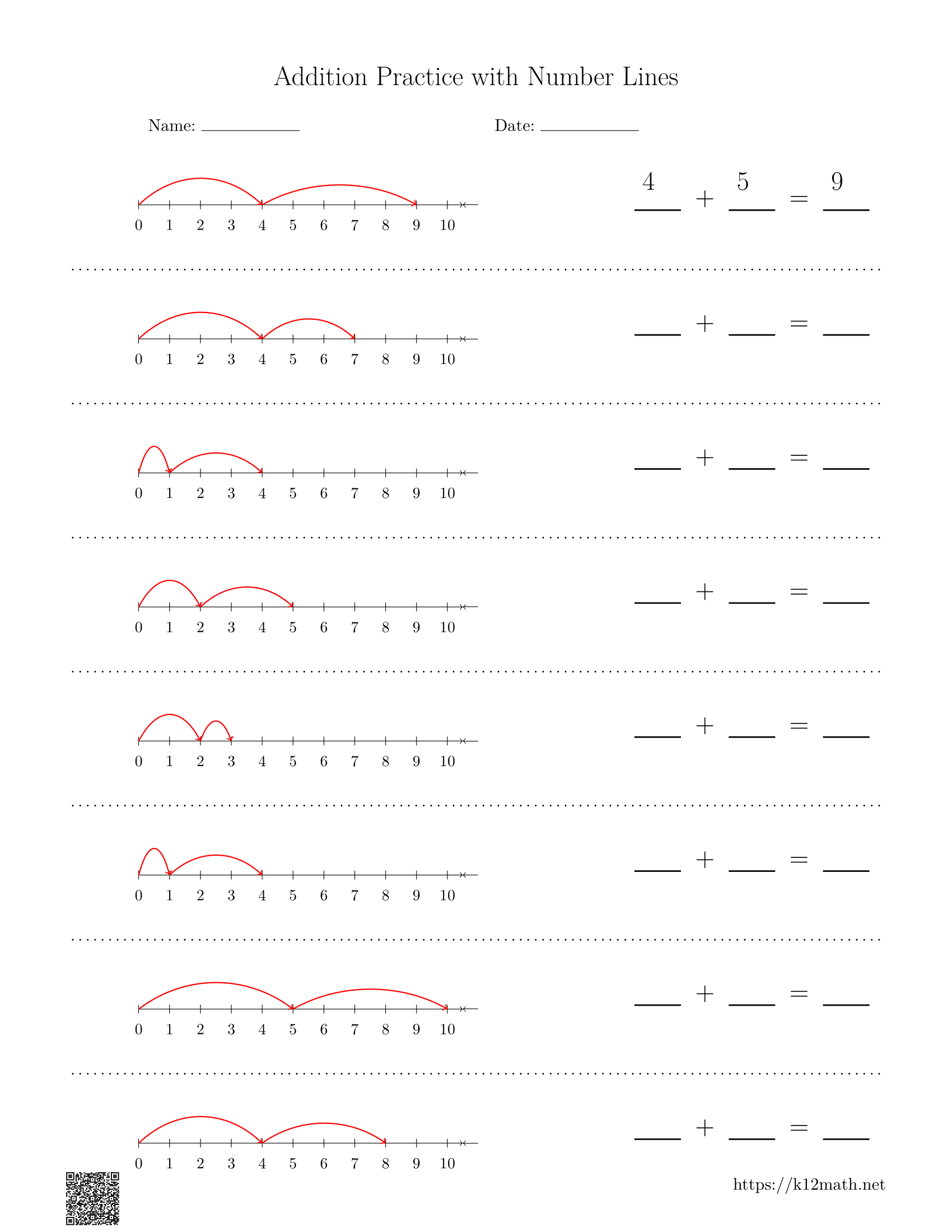
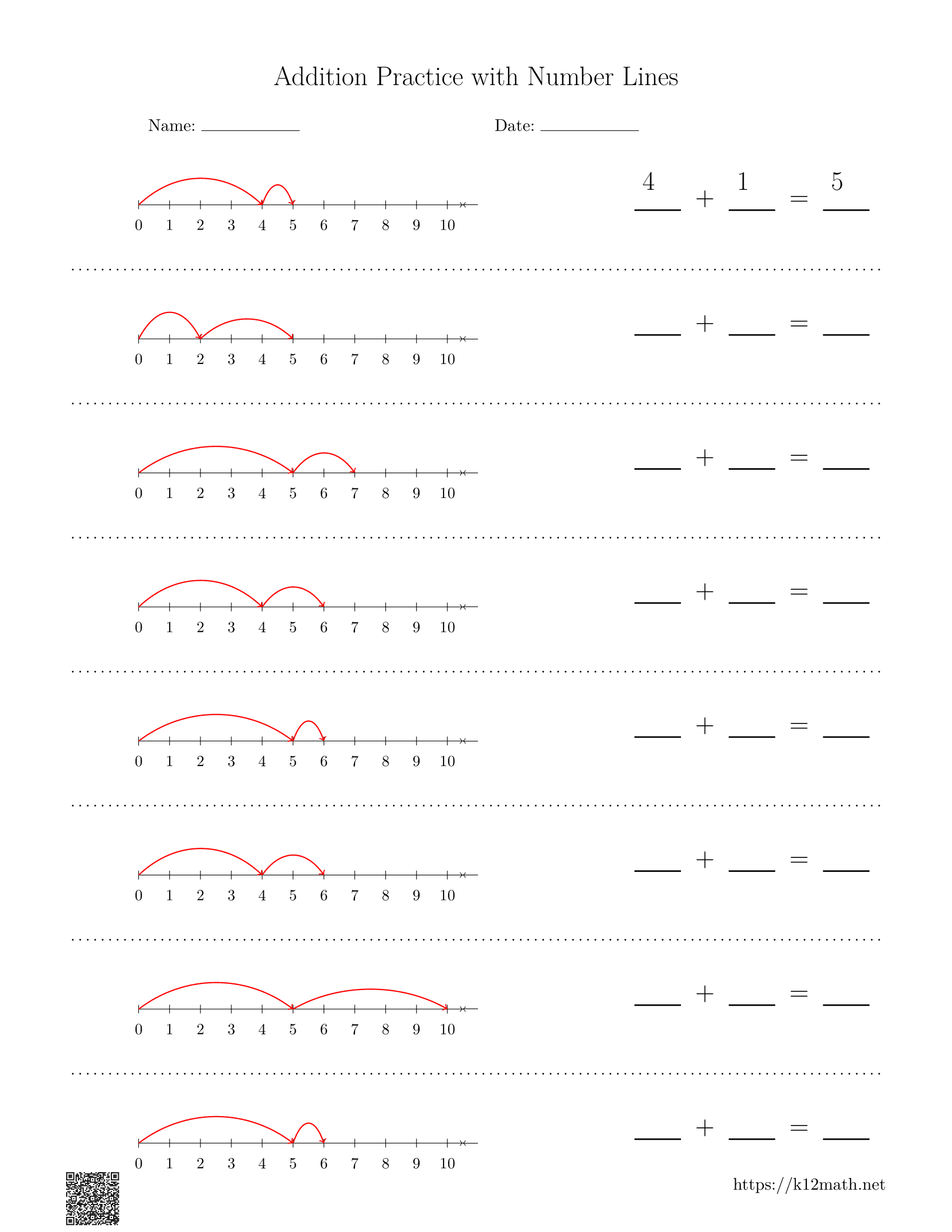
Number Line Addition up to 10 Worksheets
Basic jumps with visual support for sums within 10.


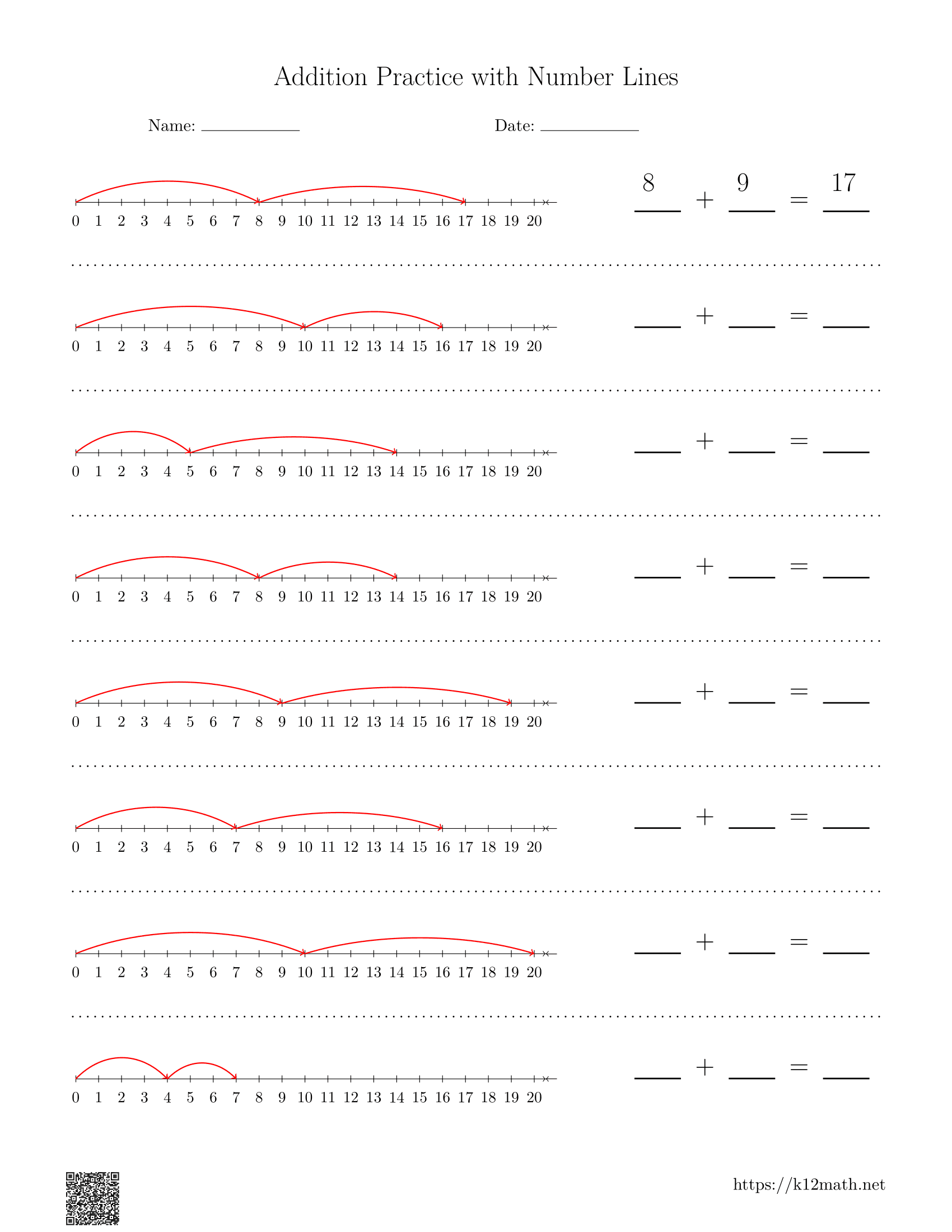
Number Line Addition up to 20 Worksheets
Extended practice with answer key for sums within 20.

Teaching Overview
When introducing number lines, begin with hands-on activities. Use a large floor number line and have students physically walk the jumps. This kinesthetic experience helps cement the concept before moving to paper.
Next, teach counting on with concrete examples. Show how starting at 5 and jumping 3 spaces lands on 8. Practice this repeatedly with different number combinations within 10 before moving to larger sums.
As students become comfortable, introduce doubles and make-ten strategies. For example, 7 + 6 can be solved by first making 10 (7 + 3) then adding 3 more. Number lines make these strategies visible and understandable.
Finally, transition to mental math while occasionally returning to number lines for verification. This scaffolding approach aligns with Common Core standards and supports diverse learners.