Subtract by Counting Back — Grade 1
Learn to subtract by counting backwards. Free printable worksheets help first graders master this essential subtraction strategy within 10.
Counting back is a powerful mental math strategy that helps first graders solve subtraction problems by starting at the larger number and moving backwards. This approach builds on students' natural understanding of counting and helps them visualize subtraction as moving in reverse on a number line.
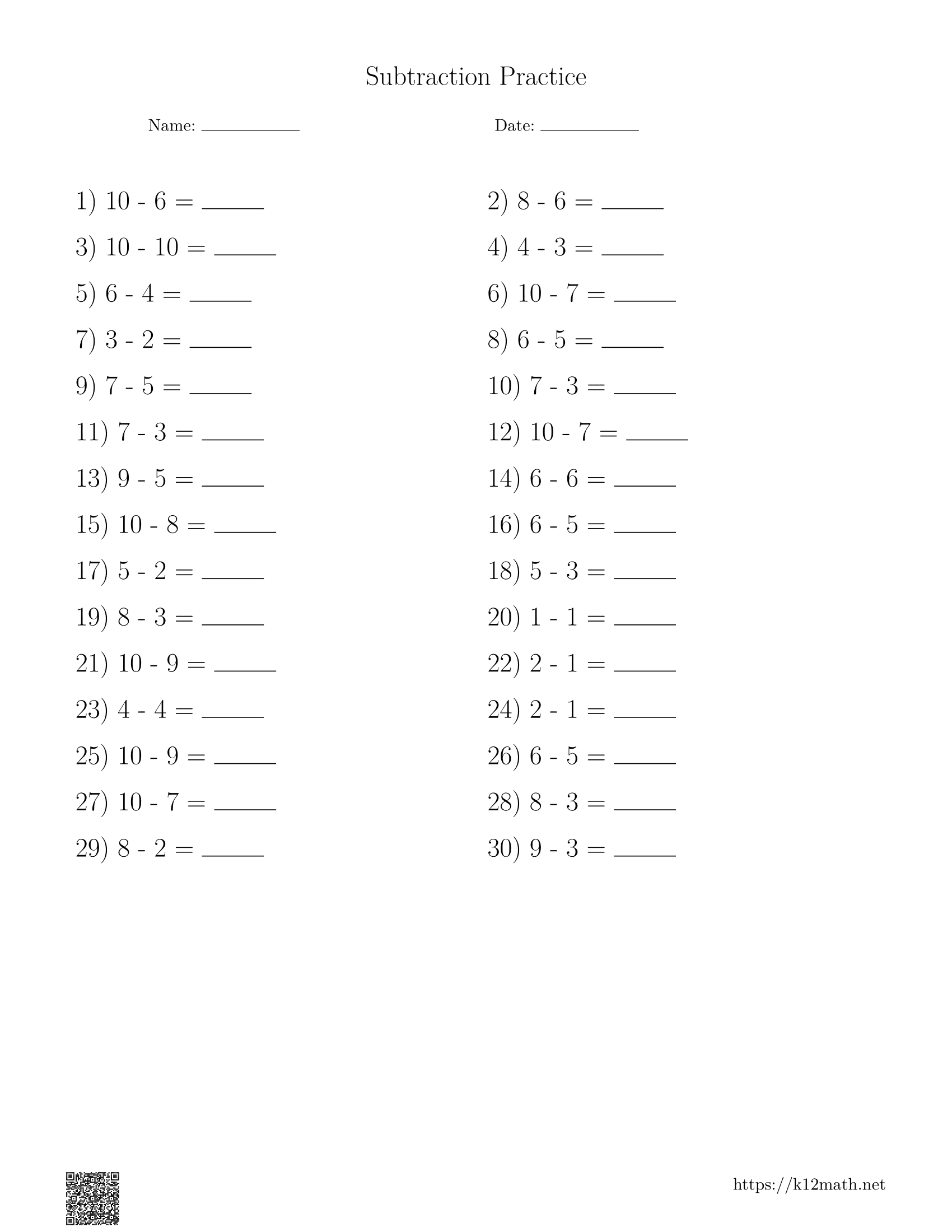
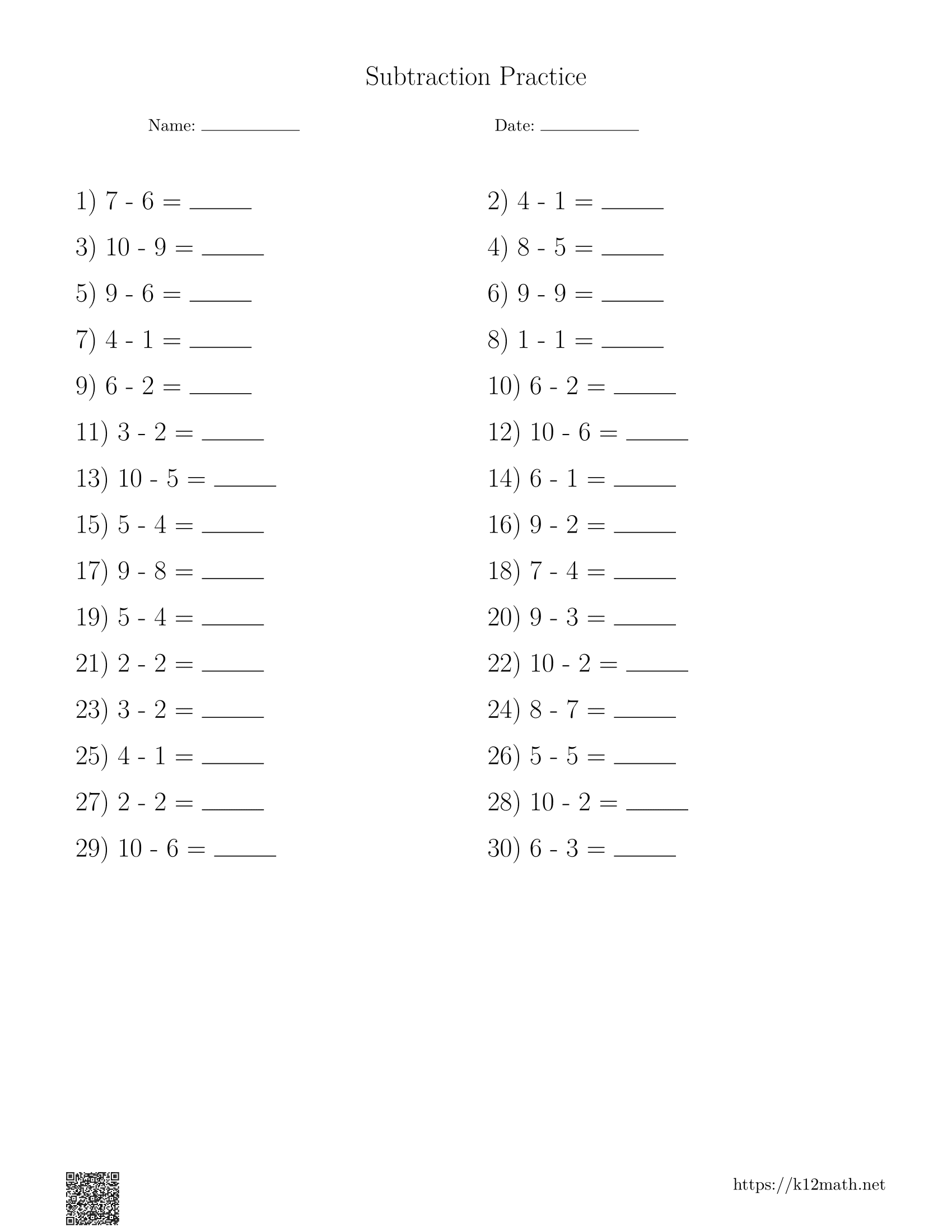
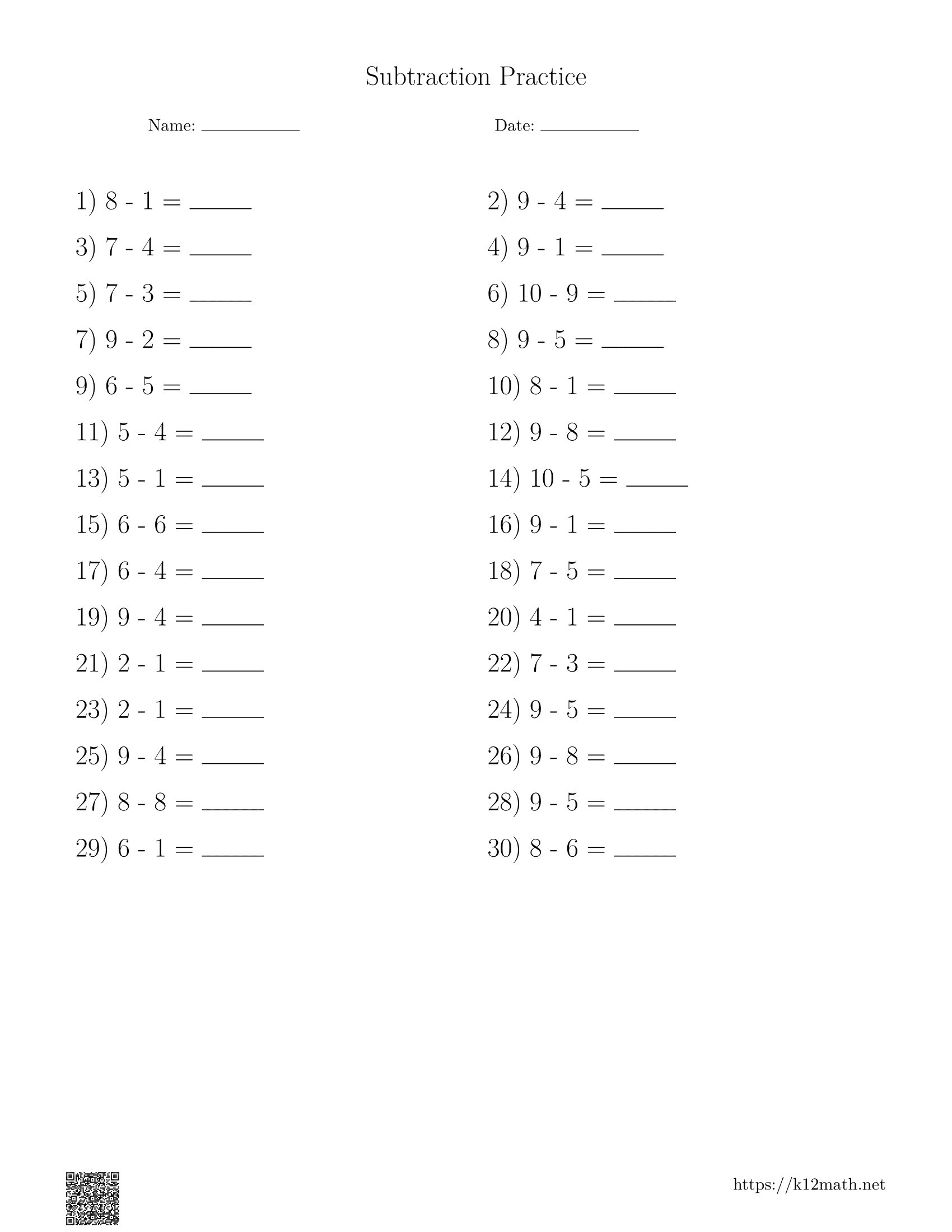
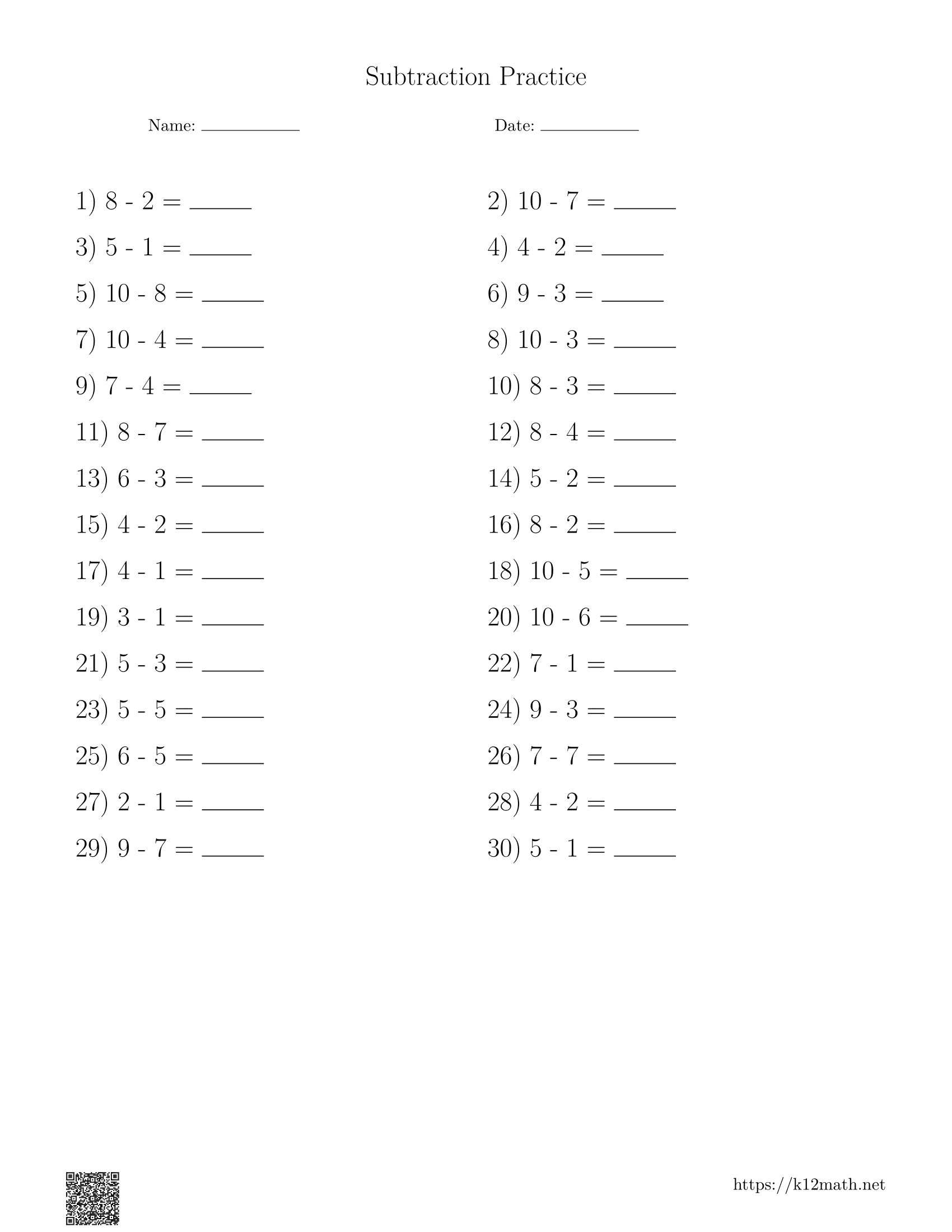
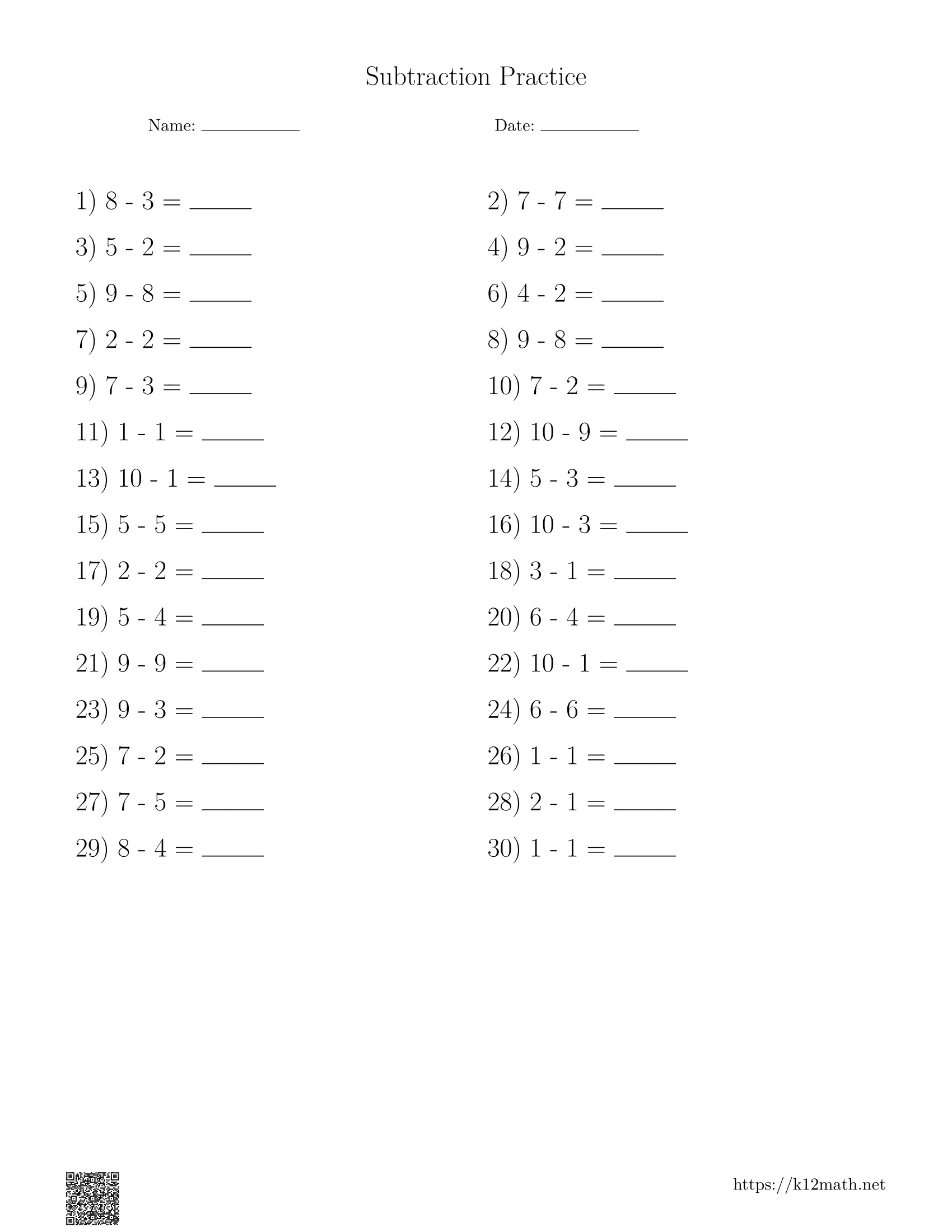
These worksheets provide structured practice for students to subtract small numbers by counting backwards. Each problem encourages students to start at the minuend and count back by the subtrahend to find the difference. With repeated practice, students develop fluency and can eventually perform these calculations mentally.
When teaching counting back, begin with concrete examples using number lines or manipulatives. Have students physically point to numbers as they count backwards, then gradually transition to mental counting. This scaffolded approach ensures students understand the concept before relying on memory alone.
Counting Back Subtraction Worksheets
Practice subtracting by counting backwards with visual number lines and answer keys.
Teaching Overview
When introducing counting back, start with a large number line displayed in the classroom. Model solving a problem like 9 - 4 by starting at 9 and physically moving backwards four spaces, counting aloud: "9, 8, 7, 6, 5." Emphasize that you're moving in the opposite direction from addition.
Next, have students practice with manipulatives. Give them 9 counters and ask them to remove 4, counting backwards as they remove each one. This concrete experience helps students understand that counting back represents physically taking away items.
As students become comfortable, transition to paper number lines. Have them draw arrows showing the backwards movement. For example, for 9 - 4, they would start at 9, draw an arrow pointing left through 8, 7, 6, and land on 5.
Finally, encourage mental counting back. Start with small subtrahends (1-3) before moving to larger ones. Some students may find counting back challenging, so be ready to introduce counting up as an alternative strategy. The goal is fluency, not forcing one specific method.