Subtract by Counting Up — Grade 1
Learn to subtract by counting up from the smaller number. Free printable worksheets help first graders master this efficient subtraction strategy.
Counting up is an efficient subtraction strategy that many first graders find easier than counting back. Instead of starting at the larger number and moving backwards, students start at the smaller number and count forward to find how many steps it takes to reach the larger number.
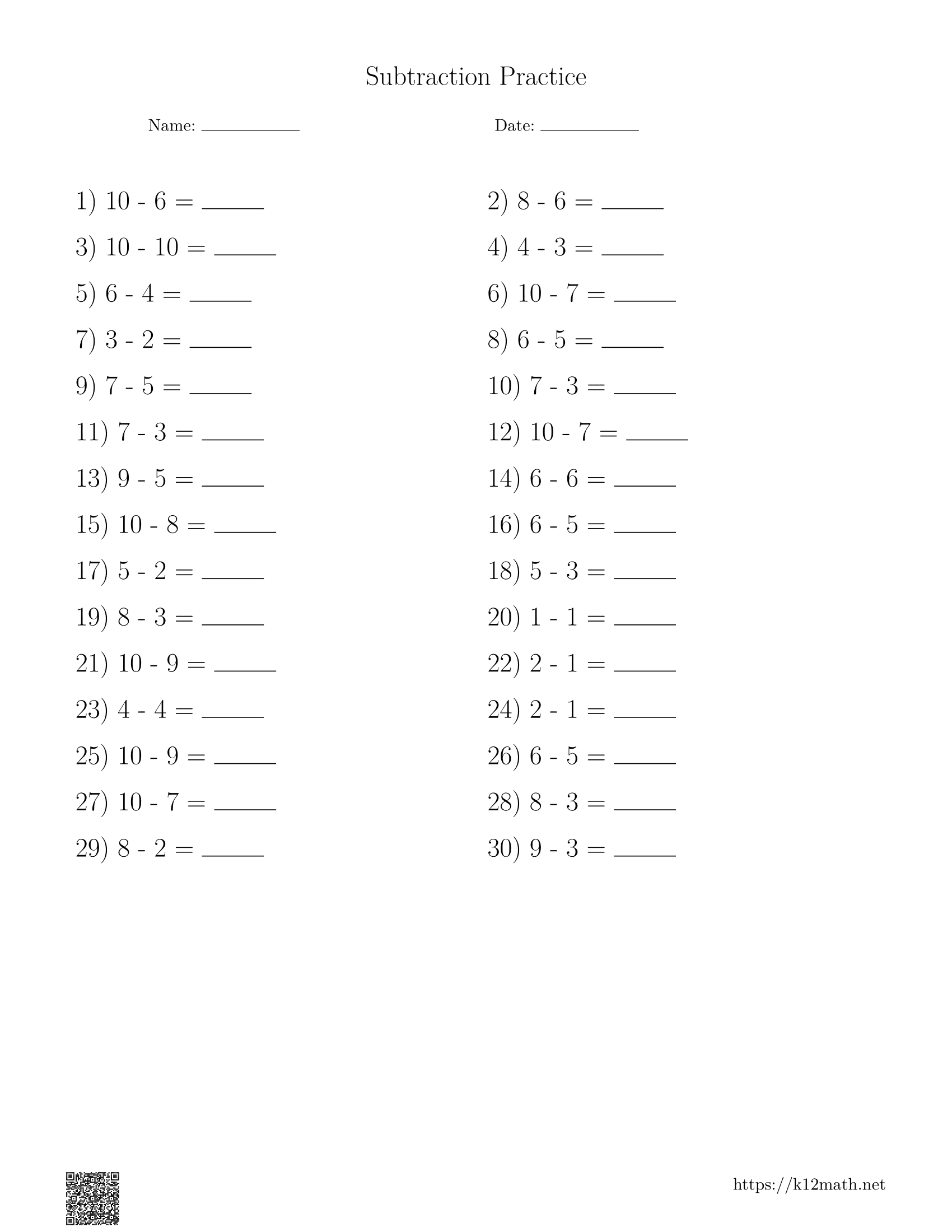
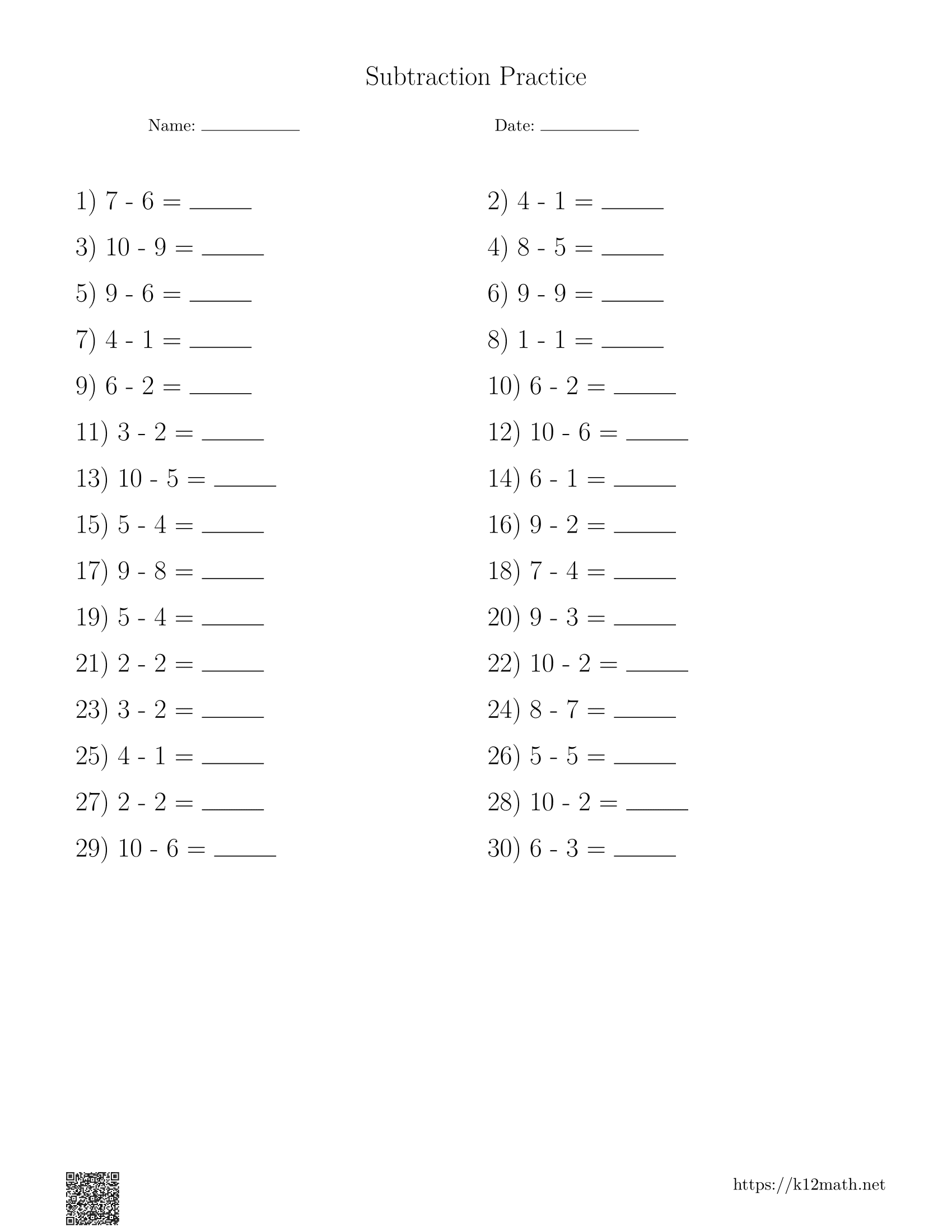
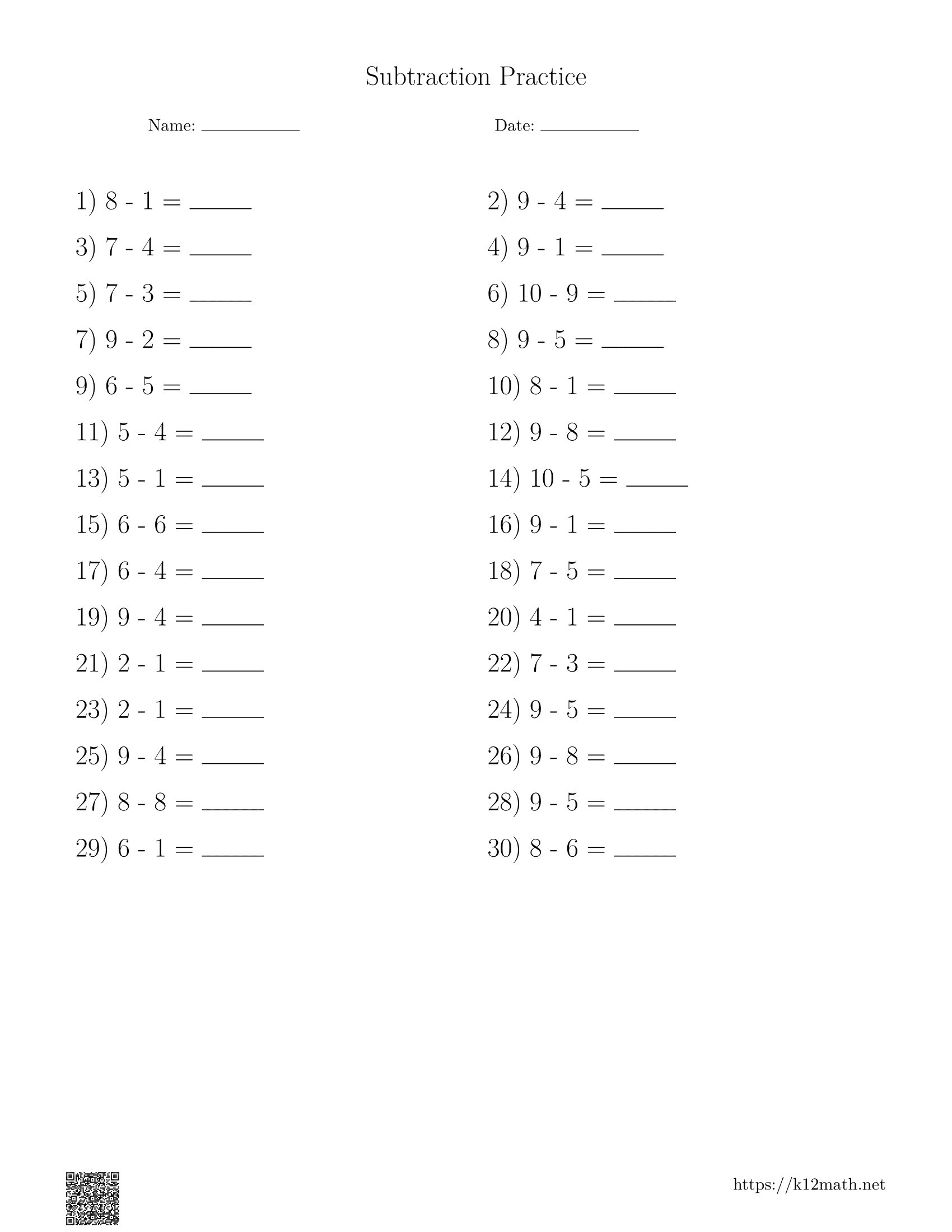
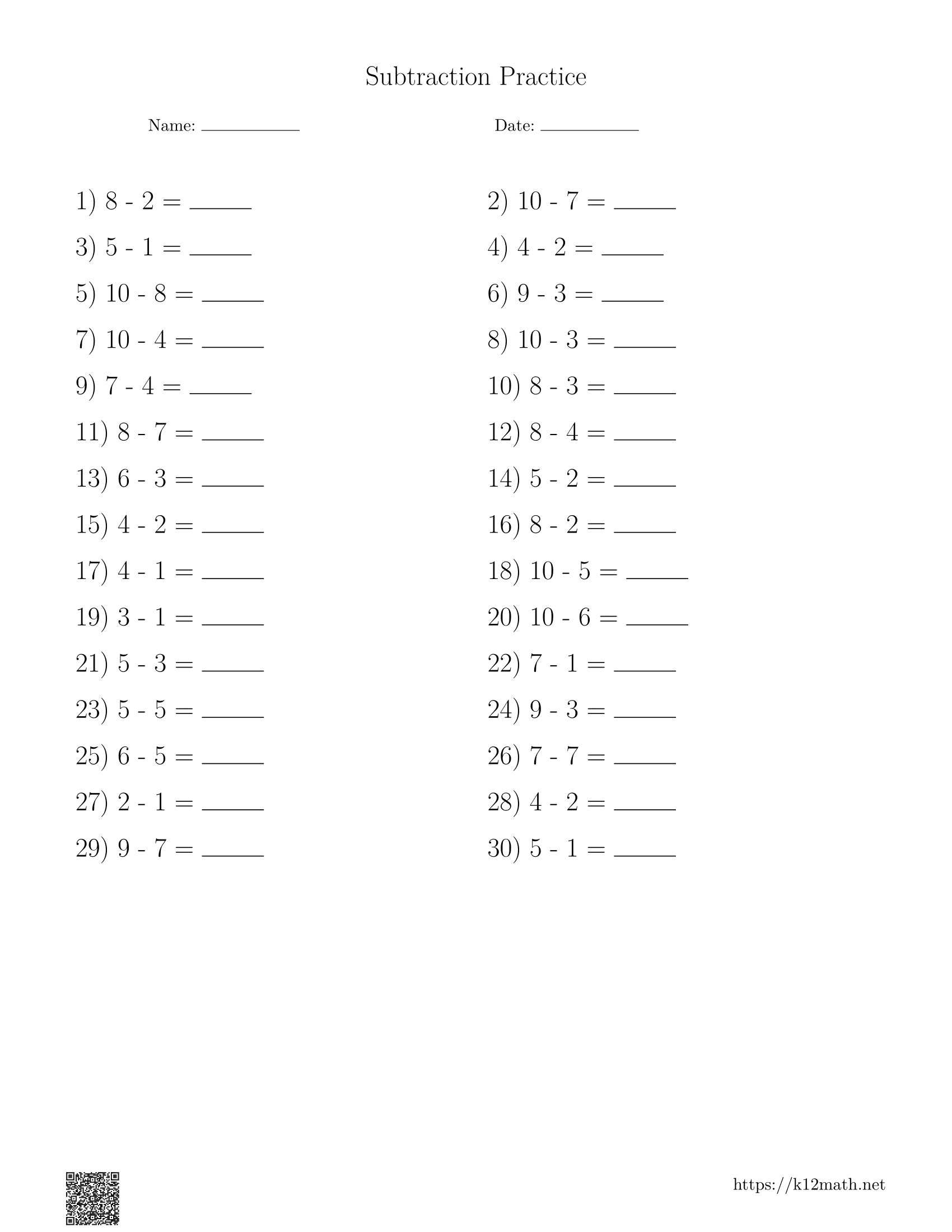
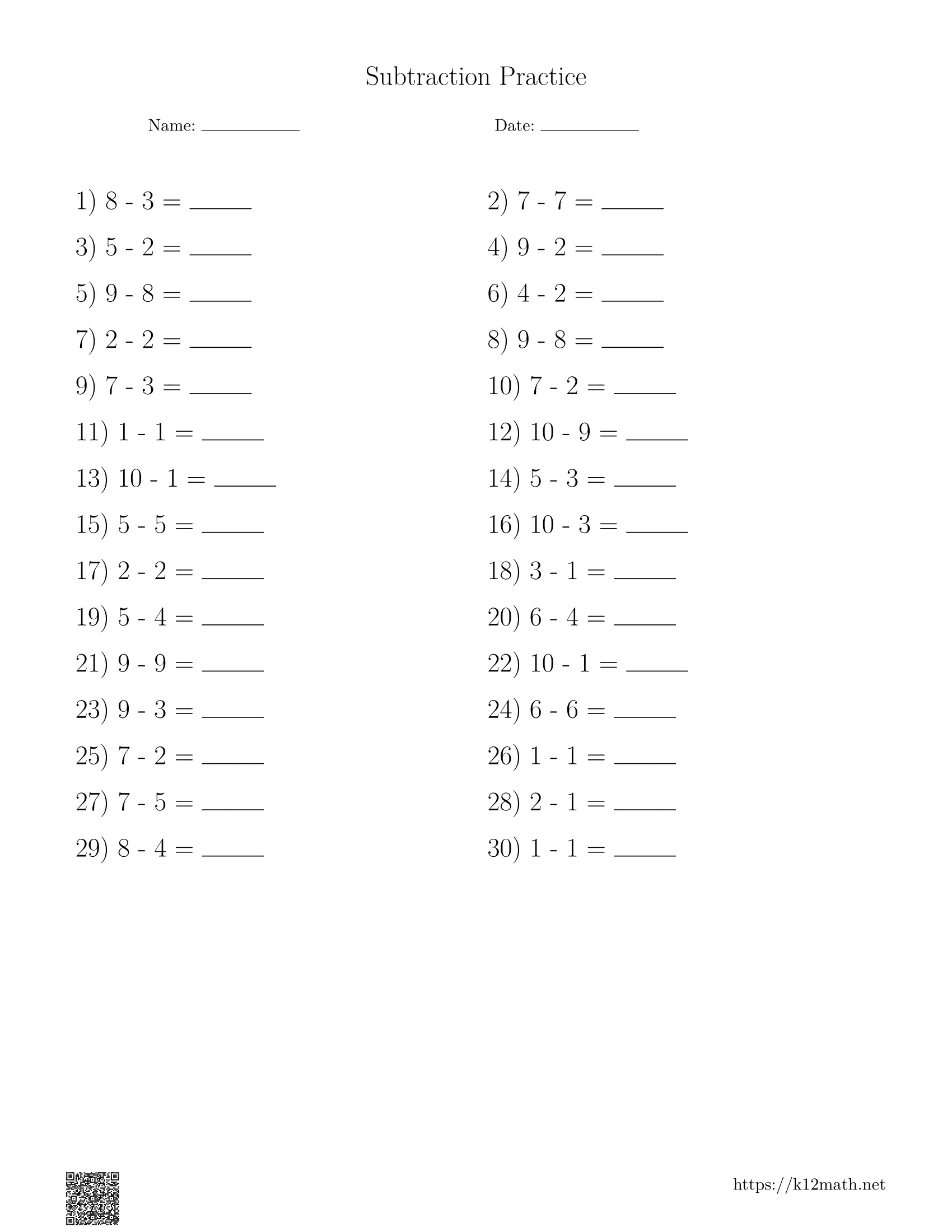
These worksheets provide structured practice for students to subtract numbers by counting up. Each problem encourages students to identify the smaller number, count forward to the larger number, and determine the difference. This approach builds on students' natural forward-counting skills and often feels more intuitive than counting backwards.
When teaching counting up, use number lines to visually show the distance between numbers. Have students physically count the steps from the smaller to larger number. This concrete experience helps students understand that subtraction can be thought of as finding the distance or gap between two numbers.
Counting Up Subtraction Worksheets
Practice subtracting by counting up with visual number lines and answer keys.
Teaching Overview
When introducing counting up, start with a number line showing both numbers in the problem. For example, for 9 - 4, point to 4 and 9 on the number line. Explain that you'll count from 4 up to 9 to find how many steps it takes. Model counting: "4, 5, 6, 7, 8, 9" while pointing to each number, then count the steps: "1, 2, 3, 4, 5 steps, so 9 - 4 = 5."
Next, use manipulatives to reinforce the concept. Place 4 counters on one side and 9 on the other. Have students add counters one by one to the group of 4, counting as they go, until they reach 9. This helps them see that counting up represents finding the missing addend.
As students become comfortable, practice with paper number lines. Have them draw arrows showing the forward movement from the smaller to larger number. Encourage them to count the steps aloud or silently.
Finally, transition to mental counting up. Start with problems where the numbers are close together (like 7 - 5) before moving to problems with larger gaps. Help students recognize when counting up is more efficient than counting back, and encourage them to choose the strategy that works best for each problem.